Business problems, solved through Intelligence

Start with the problem. Not the solution.

We solve what's costing a business its sales, its margin, or its customers — through its people and processes first, then the right technology, and AI where it actually helps. Whatever actually fixes it. Decided with someone who has run these at scale, not someone selling a tool.

A conversation for the CEO and leadership team — not a tool demo.

Start a conversation →

FinAI Innovations solves the business problems that hold a company back — in sales, marketing, production, and customer delivery — through Intelligence: the right mix of people, processes, technology, and AI. Led by Rajesh Kuppuswamy, former Managing Director of HSBC’s India Technology Centre and CEO, Digital at Intellect Design Arena. Who you work with →

What "Intelligence" means

One problem. The right mix.

Intelligence is the right mix of people, processes, technology, and AI, applied to one specific business problem.

Sometimes the answer is people: changing who is assigned to which machine, or giving the most complex work to the most skilled hands, so there are fewer reruns. Sometimes it's redesigning how the work flows. Sometimes it's a system. And sometimes it's a model that forecasts demand, flags an anomaly, or reads thousands of customer comments at once — AI applied to a named job, not "AI" in the abstract.

And in every problem below, one test comes first: is the experience truly designed around the customer — or around how the company happens to be organised?

The problem decides — not the tool. And if a problem doesn't need AI, we say so.

The problems we solve

Most of these will feel familiar. We start where it hurts.

Sales

  • Revenue is growing, but no one can say which products, channels, or segments actually drive it.
  • The pipeline forecast is a guess — and the quarter's miss shows up too late to act.

Marketing

  • The brand promise and what customers actually experience have drifted apart — and the company is the last to know.
  • Money goes out the door, but what's working can't be separated from what's noise.
  • Years of customer feedback — reviews, surveys, call logs — have never been read at scale.

Production / Operations

  • Quality varies shift to shift, line to line, operator to operator — and no one can explain why.
  • Hidden waste and rework quietly eat margin, but the reporting never surfaces it.
  • "Add AI to the floor" is the instruction, with no idea where it would actually pay back.
  • An acquisition has closed, but the people, processes and technology still run as two companies.

Customer Delivery / Service

  • Customers leave, and the company finds out after they've gone.
  • The same complaints repeat; the fixes treat symptoms, not the pattern.
  • A process that should take days — a month-end close, a new dealer’s onboarding, a warranty claim, a delivery — still takes weeks.
The thread that runs through all of it

Where does the promise break?

Every company makes a promise: to its customers, its board, its market. The problem is rarely that leadership stops caring. It's that no one can see where the promise breaks — shift to shift, branch to branch, customer to customer. By the time leadership hears of it, it is too late to act, or it never reaches them at all.

It breaks in the gaps — between departments, shifts, plants or partner companies — where no one owns it. So we start by finding where it breaks: with the people who do the work, then in the processes they run, and only then in the data and systems. What we find decides what we fix, and in what order.

How we work — one clear first step

Agree the right problem.

The first step

Six to eight weeks, fixed in scope, with the CEO, the board and the leadership team, to decide one thing: which problem to solve first, and in what sequence. We facilitate the choice against four board-level tests:

Is the business outcome measurable — and visible?
Will your people adopt it?
Will the first investment earn the next?
Will the organisation come out stronger?

The leadership team leaves with the first problem worth solving, with a design and a plan to solve it; an agreed sequence of execution, where the first investment earns the next; and the organisation aligned behind it.

Our approach

How we work.

Why most transformations fail

Plans go stale before they ship. Big-bang changes can't be measured. The technology comes first and the problem second. Foundations get built and never used. Underneath most of them is the same cause — the team was handed the change instead of owning it. Our approach is built to remove that cause.

We start by agreeing the right problem — with your leadership

The right problem is the one that passes the four tests above. We facilitate that choice with the CEO, the board, and the leadership team — because the problem, the sequence, and the funding live there, and nowhere else.

An interim Chief Transformation Officer, scoped to the project

Rajesh serves as your interim Chief Transformation Officer — scoped to the project, reporting to the CEO. We bring the vision, the design, and the management to deliver it. The build runs through your own people and vendors — not an army of ours. Technology deployed is not technology adopted.

Your people are in the driving seat — they own the solution

This is a principle, not a nicety. The people who have to run the solution own it — they sit in the driving seat for the design, the decisions, and the adoption. We bring the judgement and the pattern; they bring the context and the ownership. A solution the team owns is a solution that sticks. One handed to them is one that quietly dies.

But ownership has a cost. Do your people have the time and bandwidth to take it on? If they don't, we design for that reality — phasing the work, freeing capacity, keeping the footprint light — rather than pretend the time is there. A change no one has room to absorb is a change that fails, however good the design.

One problem at a time, in slices that pay off

We design and deliver one thing end to end, then the next. Every slice — including the foundational, plumbing work — has to meet a business outcome and be absorbed quickly, or it's wasted effort. So we never build a platform and hope. Each step lands, gets adopted, and earns the next. The first working result earns the next investment — speed to a working result is the priority.

How we design

Every solution has to clear the same bar. It must:

Meet the business needsolve the real problem, not a proxy for it
Scalehold up as volume and the business grow
Be contextual to the teambuilt so the people who run it actually can
Be cost-effectivethe right spend, not the biggest
Be built for what's nextready for where the business is going, not just where it is
Proof

Eight real problems, solved at eight real companies, across seven sectors.

In each, we found where the business was stuck and worked through the right mix of people, processes, technology and AI. In each, the problem was solved and the solution handed over.

Logistics New revenue

New revenue where there was only a cost

A company was absorbing a large cost that sat outside its product and earned nothing back. We found the way through and designed it — turning a standing cost into a new, recurring revenue line, built on data the company already owns.

Industrial Production

A faster, steadier factory

A manufacturer's output varied more than the plan allowed, and rework was consuming capacity. We began with discovery, then designed a scheduling approach the team owns — the system proposes, a person can override, and the reason is recorded.

Industrial Finance

A month-end close that became routine

A company ran its period-end close as a last-minute scramble. We worked out the fix — process continuously through the period and read the data daily, so the close shrinks from a crunch to a routine. The core system keeps doing its job.

Services Growth / Margin

Growth that doesn't bend the margin

A services business found that each increment of growth needed a matching increment of people, and the margin moved the wrong way. We designed the operating model to carry it — encoding what makes the delivery distinctive into platform and process, so routine load is absorbed and the team moves to the work that grows revenue.

Automotive Customer

Hearing what customers actually say — at scale

A large automotive business couldn't see what its customers were really saying — feedback scattered across public and internal channels, the pattern invisible. We read its customer feedback at scale, ranked it against competitors, and pulled the actual words to show exactly where the brand promise was breaking — so repairs target the pattern, not the symptom.

Healthcare Service

Service quality you can see before the customer feels the gap

In premium service settings, the intent is right and the people are capable, yet quality swings floor to floor and shift to shift, and the problem only comes to light after the fact, too late to act. We designed the answer with the teams: show supervisors where load and response times are slipping, measured against the organisation’s own promise, so teams move to where the strain is before the customer feels it.

Consumer Customer experience

One customer, one experience — across every company behind the brand

The customer experience was broken for a branded product delivered across multiple companies. Each company held its own piece of the customer: the profile, the status, the preferences and the open requests. The customer was recognised in one place and a stranger in the next, and carried the gaps from one desk to the next. We traced where the experience broke and designed it around the customer: the support teams get the capabilities they need, with AI bringing the right context to each request, so the customer walks away delighted, and comes back.

Retail Integration

Every system green, and customer journeys failing

A retail system served millions of customers. For most of a day, customer journeys were failing inside partner systems, while every one of its own systems reported healthy: when a partner timed out, the software handled that case as designed. The company found out from a customer's post on social media. Once we understood the people, their capabilities and maturity, and the processes and technology across every partner in the chain, we worked out a process and a solution that solved the customer journey end to end: a round trip that runs the entire journey through each partner and back, designed so a failure like that shows up inside the company first, not on social media.

Eight problems unblocked — new revenue, production, finance, growth, customer, service, experience, integration. One approach: find where the business result is stuck, and use the right mix of people, processes, technology and AI to free it.
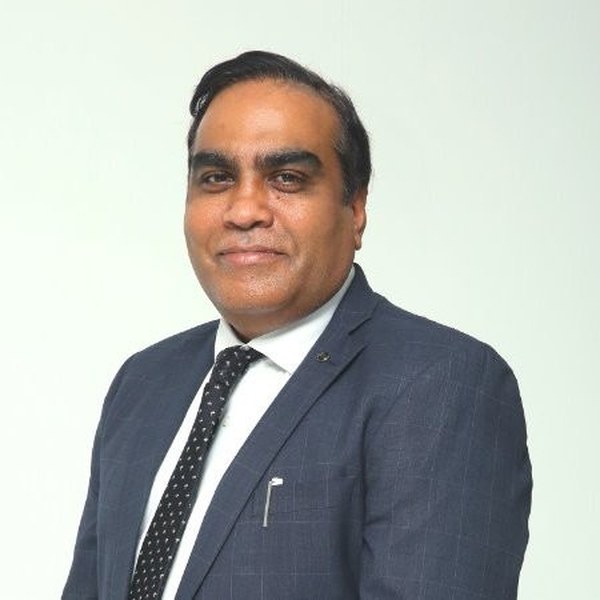

Who you work with

An executive who has built and run these at global scale.

Rajesh Kuppuswamy

Rajesh Kuppuswamy — Founder, FinAI Innovations

Rajesh Kuppuswamy founded FinAI Innovations after three decades building and running business, technology, and operations at global scale — as a CEO and CTO, and across product management, sales, and marketing. Across industrial IoT, retail, telecom and financial services, he saw the same pattern everywhere: technology gets deployed, not adopted, because the change is handed to teams instead of owned by them. FinAI exists to fix that — start with the right problem, deliver it through your own people.

He has built more than 500 integrations, at every step of his career: Boeing's non-production procurement and its payment providers, the Chevron Retailers Exchange, Microsoft's payments worldwide — cards in the US, SMS payments in Europe, prepaid cards and micro payments globally — and implementations across countries at Intellect. Most were built where every transaction must reconcile to the last paisa, a standard few integrations are held to. An integration works only when the people and the processes connect, with technology where it is needed, and the customer journey holds across every company involved.

CEO, Digital — grew the business 10x
Managing Director, India Technology Centre — 5,000 people supporting the business in 60 countries
Built the first console AWS customers use to control who can access what
Global payments at scale
Enterprise transformation — Chevron, Boeing

Inventor on 13 patent filings across India and the United States; four United States patents granted. See the list →

Start with the problem.

Reply to the email that brought you here, or tell us about the problem below and pick a time to speak with Rajesh. No pitch — we start by understanding what's costing your business.

Tell us a little, then pick a time — the conversation goes straight to Rajesh.